Go Outside and Play!

“Go outside and play!” said God.
“I have given you Universes
as fields to run free in!
And here—take this and wrap yourself in it—It’s called:
LOVE
and It will always, always keep you warm.
And stars! The sun and the moon and the stars!
Look upon these often, for they will remind you
of your own light!
And eyes…oh, gaze into the eyes of every Lover.
Gaze into the eyes of every other
for they have given you their Universes
as fields to run free in.
There.
I have given you everything you need.
Now go, go, go outside and play!”

‘Go Outside and Play’ © 2007 Em Claire
myspace layouts

myspace layouts

THANK YOU FOR VISITING "MUSINGS". HOPE YOU WILL SIGN MY GUESTBOOK AND FEEL FREE TO COMMENT ON ANY INDIVIDUAL POST. COMMENTS OPTION IS AT THE BOTTOM OF EACH POST. I HOPE YOU WILL ENJOY YOUR VISIT AND RETURN OFTEN!

Mountain Top Guest Book

View Guestbook
Sign Guestbook

Tuesday, April 16, 2013

PLACE OF REFUGE...


Located on the coast of Honaunau Bay in south Kona, Puuhonua o Honaunau immerses you in Hawaiian culture. This 180-acre national historic park was once the home of royal grounds and a place of refuge for ancient Hawaiian lawbreakers.

Kapu, or sacred laws, were of utmost importance to Hawaiian culture and the breaking of kapu could mean death. A kapu-breaker's only chance for survival was to evade his pursuers and make it to a puuhonua, or a sacred place of refuge. Once there, a ceremony of absolution would take place and the law-breaker would be able to return to society.


Beyond the puuhonua, explore the nearby Royal Grounds, which were the sacred home of alii. See Keoneele Cove, the royal canoe landing; the Keoua Stone, the favorite resting place of the high chief of Kona, Keaoua; as well as halau (thatched work house), fishponds and a heiau (sacred temple) that is one of the oldest structures in the park. Beautiful at sunset, this sacred place gives visitors an important glimpse into early Hawaiian culture.
Hundreds of years old yet beautifully restored, Puuhonua o Honaunau remains one of Hawaii's most sacred historic places. Follow the park and map and take a self-guided walking tour and explore the grounds including the Great Wall, standing 10-feet high and 17-feet thick. Fierce kii, or wooden images of gods, guard the Hale o Keawe Heiau, a sacred temple that housed the bones of 23 alii (chiefs).


Lava rock shore line
A black lava rock shoreline hindered kapu-breakers from approaching by sea

Thursday, April 11, 2013

VOLCANO NATIONAL PARK

Natalie and me
 

Natalie and Cathy
 
Life springs eternal as coconut trees take root in the lava rocks!
 

Wednesday, April 10, 2013

LOVING THE RAINFOREST...

from volcanoes to the rainforest in the same park...


Cathy from Ohio/Austin with Natalie

Sunday, April 7, 2013

MERRIE MONARCH 2013

"Hula is the language of the heart and therefore,  the heartbeat of our Hawaiian people."
                                                              ~King David Kalakana


The Merrie Monarch Festival is dedicated to the memory of King David Kalākaua, known as the Merrie Monarch. King Kalākaua came to the throne of the Hawaiian Kingdom in 1874 and reigned until his death in 1891. He was a patron of the arts, especially music and dance.

Kalākaua restored Hawaiian cultural traditions that had been suppressed for many years under missionary teachings.  He advocated a renewed sense of pride in such things as Hawaiian mythology, medicine, chant, and hula.

Ancient Hawaiians had no written language, but chant and hula served to record such things as genealogy, mythology, history, and religion.  Hula, the dance of Hawaiian people, was one means by which culture was expressed and passed down through generations.

The Merrie Monarch Festival has steadfastly maintained the teachings of our kupuna, our elders, and in doing so we strive to perpetuate the history and culture of Hawaiian people in a manner that respects those teachings.  Through our efforts, along with those of other organizations, we hope to ensure that the unique traditions of Hawaiian people will continue to flourish.


History of the Merrie Monarch Festival

The Merrie Monarch Festival began in Hilo, Hawaiʻi in 1963 when Helene Hale, the Chairman of the County of Hawaiʻi, looked for a way to attract tourists to the island. Hawaiʻi Island needed an economic boost after suffering from a tidal wave and business downturn.

“I was the Executive Officer of Hawaiʻi – it wasn’t called mayor … when the sugar industry went down, it was very depressed over here,” said Helene Hale.

Hale sent her Administrative Assistant, Gene Wilhelm, and her Promoter of Activities, George Naʻope, to check out the Lahaina Whaling Spree on Maui to see what lessons could be brought back.   They returned inspired.

In 1964, the festival consisted of a King Kalākaua beard look-alike contest, a barbershop quartet contest, a relay race, a re-creation of King Kalākaua's coronation, and a Holoku Ball among other events.  But by 1968 the festival fell into hard times and would have been suspended had it not been for Dottie Thompson, who took over as Executive Director of the festival.

“My mom wanted to move the festival more toward a Hawaiian theme, and so she brought back Uncle George Naʻope and Albert Nahalea," said current festival president, Luana Kawelu.  "Uncle George would be in charge of the pageantry and the coronation, and Albert Nahalea would be in charge of the music.  They wanted to replicate what King David Kalākaua had done, bringing the best hula dancers from around the islands to come and perform and share quality and the authenticity of hula at the time.”

With advice from the hula masters, "Aunty" Dottie and "Uncle" George introduced a hula competition in 1971. Nine wahine (women) hālau entered that first year, and Aloha Dalire won the first Miss Hula title.  In 1976 when the festival opened the competition up to kāne (men), the festival began to take off and attracted hordes of enthusiastic fans.

Today, the festival enjoys enormous popularity and worldwide attention.

  Cathy and Natalie enjoying the scenery at the Merrie Monarch at Hilo Bay


COWBOYS EVERYWHERE...

...suddenly looking forward to my trip to Maui!!
 MERRIE MONARCH PARADE IN HILO


A SEEDLING...

Merrie Monarch in the making...
 

Friday, April 5, 2013

DREAMS DO COME TRUE...

at the most unexpected times and places!!
 
MERRIE MONARCH 50TH ANNIVERSARY CELEBRATION
HULA DANCERS FROM AROUND THE WORLD GATHER TO CELEBRATE AND COMPETE

Thursday, April 4, 2013

LAVA ARCH

Lava arches are formed as the lava flow slows and hardens as it reaches the ocean.
Volcano State Park...at The End of The Road

Tuesday, April 2, 2013

KILAUEA

Kilauea has a large summit caldera with a central crater, Halemaumau, which is according to Hawaiian legends the home of the fire goddess Pele. Until 1924, it contained a lava lake. Kilauea has frequent summit and flank lava flow eruptions that are occurring along two elongated rift zones to the south-west and to the east, which extend to the sea on both sides of the volcano. The 3 x 5 km caldera was formed in several stages about 1500 years ago. About 90% of the surface of the basaltic shield volcano is formed of lava flows less than about 1100 years old; 70% of the volcano's surface is younger than 600 years. The long-term eruption from the East rift zone that began in 1983 has produced lava flows covering more than 100 sq km, destroying nearly 200 houses and adding new coastline to the island.
 Kilauea volcano, a youthful shield volcano, sitting on the south east flank of the massive Mauna Loa shield volcano, is the youngest volcano (on land) of the Hawaiian hot spot and not only the most active volcano of Hawaii but at the same time also the world's active volcano. It has been in near-constant activity since there is oral or written history and it is having an uninterrupted eruption since 1983 (at present at the Pu'u 'O'o vent on the East rift zone).

Its eruptions are prominent in Hawaiian Polynesian legends and written documentation about its activity go back to only 1820s when it started to attract interested visitor from all over the world and bacame one of volcanology's hot spots.
 Kilauea is the youngest and most active Hawaiian shield volcano, located on the southern part of the Island of Hawai'i, known as Big Island. Hawai'i is the southernmost and largest of the island chain, which owes its existence to the very active Hawaiian hot spot.
 Kilauea volcano is near-constantly erupting from vents either on its summit (caldera) or on the rift zones. At present, Kilauea volcano is still having one of the most long-lived eruptions known on earth, which started in 1983 on the eastern rift zone and has mainly been concentrated at the Pu'u 'O'o vent

Monday, April 1, 2013

THE BEST LAID SCHEMES...

 
We were told of this charming little place that we could stay on our weekend to Kona.  So we booked it sight unseen...bad idea!  This is one of those times when a sense of humor is a must.  We did upgrade for our second night.  Actually we did have an ocean view, along with peacocks, peahens, angry chickens and barking dogs...had a visit from the wild pigs, too.  An adventure within an adventure!


Sunday, March 31, 2013

HAWAII'S STATE BIRD...


THE NENE
 
 
First sighting for me on the lava fields at the End of the Road in Volcanoe State Park.
 
Nearly exinct in the wild in 1951, captive-bred birds have been reintroduced since 1957 into Haleakala Crater on Maui and in its former range on Hawai'i.  These populations are not self-sustaining due to predation by introduced mongooses and feral cats on eggs, young, and brooding adults.  Nene were recently reintroduced to Kaua'i, h\where there are no mongoose, and they are increasing rapidly.

Friday, March 29, 2013

THURSTON LAVA TUBE...

Nahuku (Thurston Lava Tube), Hawaii Island Thurston Lava Tube, a 500-year old lava cave located within Hawaii Volcanoes National Park. Lava caves like this are formed when a river of lava gradually builds solid walls and a ceiling. When the lava flow stops and the last of it passes downhill, a cave is formed. These caves can be a few feet high and only yards long, or they can stretch for miles with high ceilings. The Thurston Lava Tube is a fantastic example of a massive lava cave.  . The solidified drips and waves of once-liquid lava rock clearly show the molten forces that created this cave. Your flashlight reveals beautiful shapes and colors of minerals leeching from the rock. A tropical rainforest awaits at the end of Nahuku.

Wednesday, March 27, 2013

A DIFFERENT KIND OF RAINBOW...

 
As we took our weekend trip, my friend Martha and I, around Big Island, we found this most glorious rainbow of Bougainvillea...a definite photo opportunity!

Tuesday, March 26, 2013

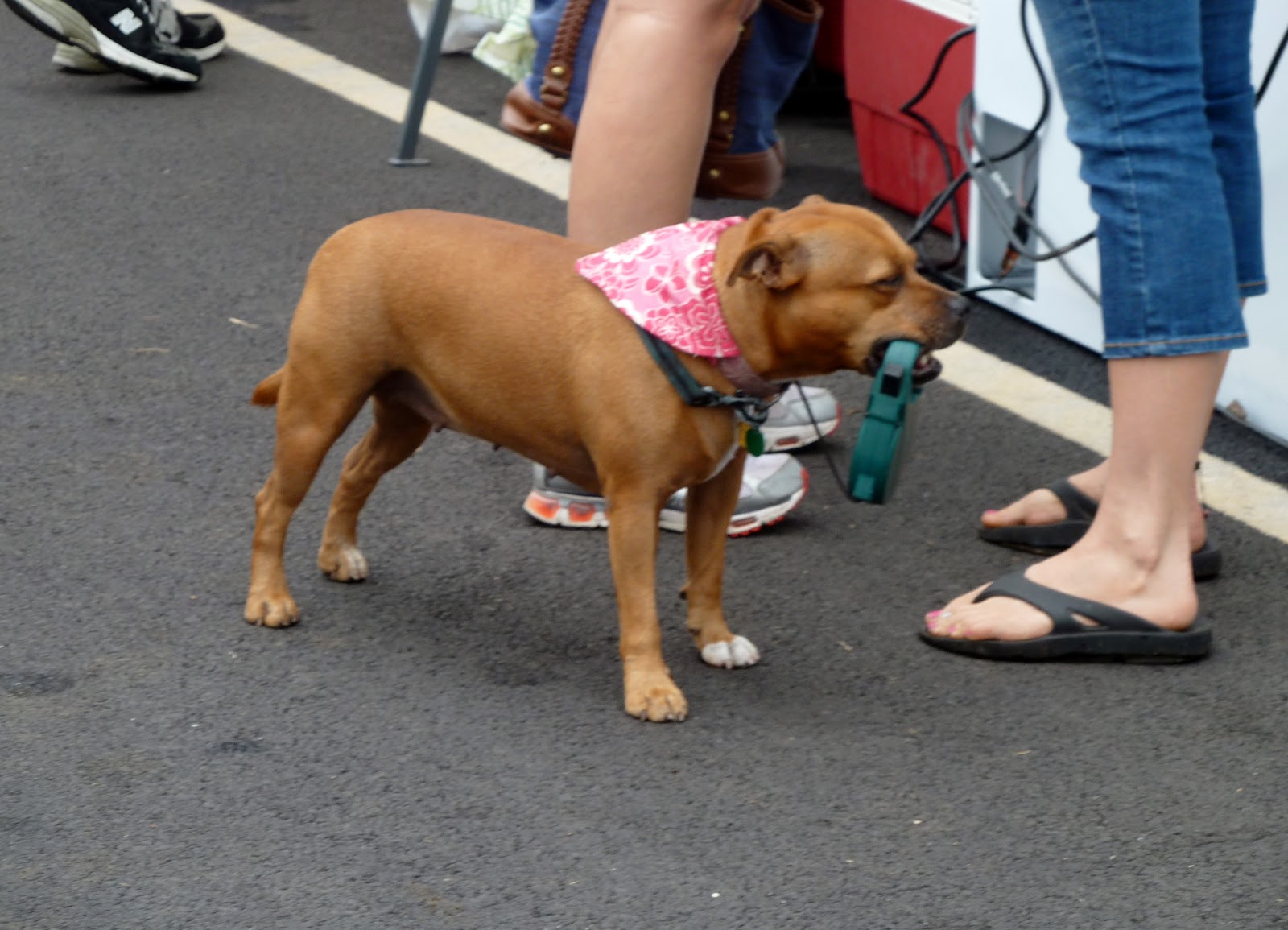
OBEYING THE LAW...


ALL DOGS ATTENDING THE OUTDOOR MARKET MUST BE WEARING A LEASH!!!

Tuesday, March 19, 2013

HILO, HI

A busy farming and fishing area in early times, Hilo evolved into a commercial center for the sugar industry in the 1800’s. Downtown Hilo was built around its crescent-shaped bay and became the seat of county government. In 1946 and 1960 the town was nearly swallowed by a tsunami.
Crescent-shaped Hilo Bay
 
 
The Hilo region is blessed with dramatic waterfalls, fertile rainforests and blooming gardens.  Just west of Downtown Hilo, Wailuku River State Park is home to the 80-foot Rainbow Falls and Peepee Falls which feeds the beautiful pools called Boiling Pots.

LOOKING FOR A NEW HOME?...

Recently renovated home in Sea View, HI.
and its for sale!

Sunday, March 17, 2013

SOME LOCAL SCENERY...

Poi masher at the S.P.A.C.E. market held every Saturday...pretty nice scenery, no?
 

A BANYAN TREE WITH A HATCHLING...

texting!


Friday, March 15, 2013

A THOUGHT TO PONDER...

 
          IF YOU TRY TO FAIL AND YOU SUCCEED, WHICH HAVE YOU DONE?